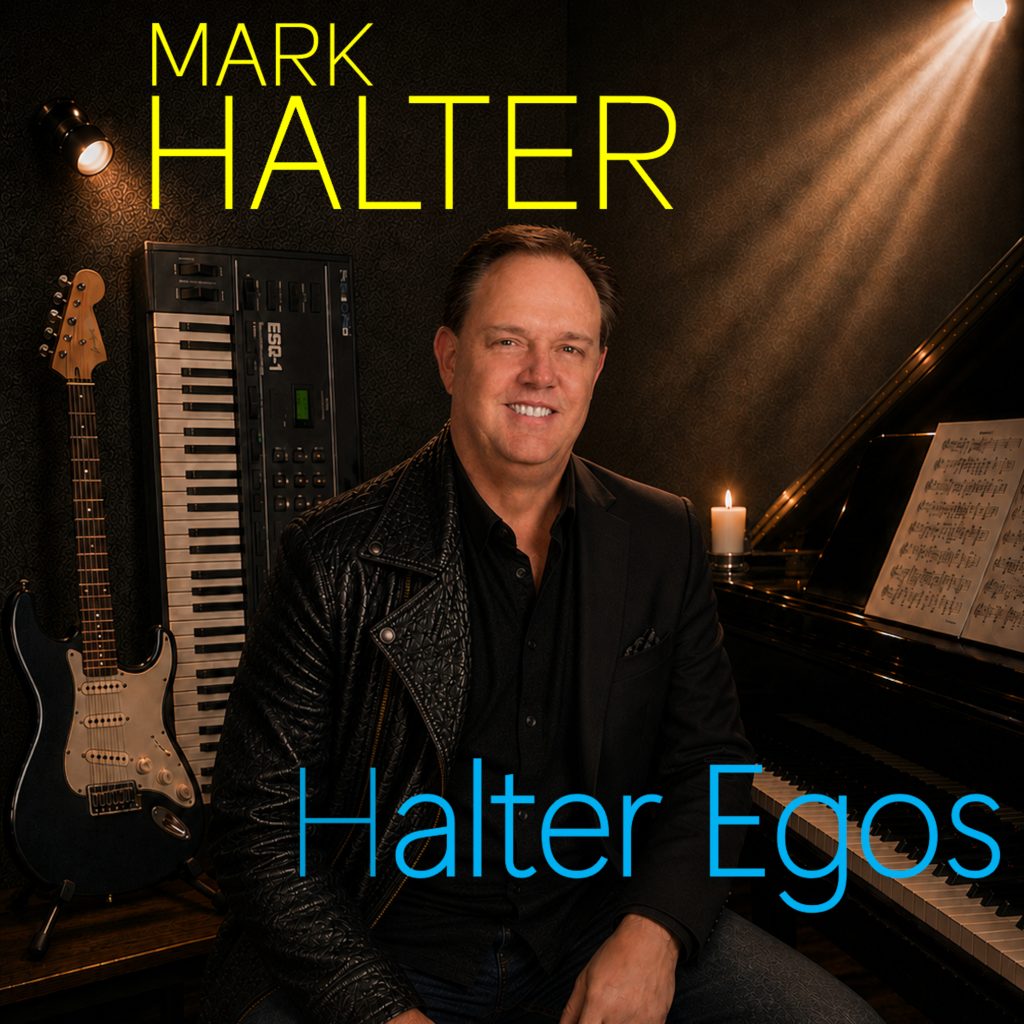
Halter Egos
The debut album from Mark Halter
Original songs about life, love, loss, regret, hope, faith, and finding your place in the world.
Halter Egos is a personal collection of songs written from real life — reflective, emotional, sometimes gritty, and always honest.
Blending piano-driven ballads, rock influences, and singer-songwriter storytelling, the album captures the feeling of looking back, moving forward, and reaching for something beyond the ordinary.
Track List
“Where Do We Stand” is a polished, heartfelt slice of melodic rock that successfully bridges classic ’80s influences with modern independent production. It’s the kind of song that earns repeat listens—not through novelty, but through strong songwriting, relatable emotion, and a chorus that lingers long after the final note.
On “Where Do We Stand”, Mark Halter delivers an emotionally charged blend of melodic rock and synth-driven pop that feels both contemporary and unmistakably rooted in the golden age of 1980s arena music. Rather than chasing current trends, the song leans into timeless songwriting—strong hooks, layered instrumentation, and a vocal performance that prioritizes sincerity over excess.
The production opens with atmospheric keyboards before giving way to crisp electric guitars and a driving rhythm section that steadily builds momentum. The arrangement is polished without feeling sterile, allowing each instrument room to breathe. Particularly effective is the interplay between shimmering synthesizers and guitar textures, creating a widescreen sound reminiscent of classic FM radio while maintaining modern clarity.
Lyrically, “Where Do We Stand” explores the uncertainty that follows emotional distance in a relationship. Rather than offering dramatic confrontation, the song lives in the uncomfortable questions that arise when communication breaks down. It’s reflective without becoming self-indulgent, making its central theme broadly relatable.
Halter’s vocal performance carries the emotional weight convincingly. His delivery isn’t about vocal acrobatics; instead, it succeeds through authenticity and restraint. As the chorus arrives, the melody expands naturally, providing the song’s strongest moments and giving listeners something memorable to take away after a single listen.
From a production standpoint, the mix is balanced and radio-friendly. The low end remains supportive without overpowering the arrangement, guitars retain warmth and definition, and the synth elements add depth rather than competing for attention. The chorus benefits from tasteful layering that gives it lift without sounding overproduced.
What ultimately makes “Where Do We Stand” stand out is its confidence. It doesn’t try to reinvent melodic rock—it embraces the genre’s strengths: memorable melodies, emotional honesty, and craftsmanship. In an era where many independent releases rely heavily on production tricks, Halter instead delivers a song built on solid songwriting, making it equally suitable for adult contemporary rock playlists, melodic rock audiences, and listeners who still miss the emotional directness of ’80s album-oriented rock.
“Time to Rock and Roll” is an upbeat, guitar-driven anthem that captures the spirit of classic melodic rock with modern production. It’s confident, fun, and refreshingly unpretentious—a reminder that sometimes the best rock songs simply invite listeners to turn up the volume and enjoy the ride.
If “Where Do We Stand” showcased Mark Halter’s reflective songwriting, “Time to Rock and Roll” throws subtlety out the window in favor of pure rock-and-roll adrenaline. From the opening seconds, the song establishes its mission: crank up the guitars, turn up the volume, and invite listeners to forget their worries for a few minutes.
Musically, the track lives comfortably between classic arena rock and modern melodic hard rock. Thick electric guitars, a driving rhythm section, and bright keyboard textures create a full-bodied sound that recalls the radio-friendly rock of the late ’80s without feeling like nostalgia for nostalgia’s sake. There’s an infectious forward momentum throughout, making it easy to imagine the song opening a live set or igniting a crowd before the first chorus even lands.
The biggest strength is its energy. Rather than relying on studio tricks, the performance feels like musicians enjoying themselves. The guitars carry plenty of bite while remaining polished, and the rhythm section keeps everything moving with confidence.
Vocally, Halter delivers with conviction. His performance fits the material well—less about technical showmanship and more about communicating enthusiasm. The chorus is designed for participation, the kind of hook audiences naturally begin singing back after only a listen or two.
Production-wise, the recording is clean and balanced. The guitars occupy center stage without burying the keyboards, while the drums provide enough punch to keep the arrangement feeling powerful. The mix has enough space that individual instruments remain distinguishable, avoiding the overly compressed sound that can plague independent rock releases.
Lyrically, the song embraces a timeless rock tradition: celebrating music itself. Rather than trying to be overly clever, it succeeds by being direct and authentic. That simplicity works in its favor because the emotional goal isn’t introspection—it’s excitement.
“More Than Friends” is a polished melodic-rock anthem built on strong songwriting, warm vocals, and a chorus that lingers. It proves that emotional honesty and timeless melodies remain just as compelling today as they were during the heyday of album-oriented rock.
With “More Than Friends,” Mark Halter demonstrates that memorable melodic rock doesn’t have to rely solely on volume or nostalgia—it can also succeed through strong songwriting and emotional authenticity. The song captures the anticipation, uncertainty, and excitement of a relationship that seems destined to become something deeper, delivering its message with confidence rather than sentimentality.
Musically, the track occupies a comfortable space between adult-oriented rock, melodic pop, and classic AOR. The arrangement is carefully layered, combining shimmering keyboards with tasteful electric guitars that complement rather than overpower the vocals. The result is polished and accessible, recalling the craftsmanship of late-’80s radio hits while sounding contemporary enough for today’s independent rock audience.
The melody is one of the song’s greatest strengths. The verses establish a relaxed, conversational mood before naturally building toward a chorus that feels earned instead of forced. It’s the kind of chorus that stays with the listener long after the song ends—a hallmark of well-written melodic rock.
Vocally, Halter continues to play to his strengths. Rather than attempting vocal gymnastics, he delivers the lyrics with sincerity and warmth, allowing the emotional content of the song to come through naturally. That approach makes the performance believable, particularly on a song built around romantic possibility rather than dramatic heartbreak.
Production is another highlight. The mix gives every instrument its own space while maintaining a cohesive, radio-ready sound. The guitars provide sparkle and texture, the keyboards create atmosphere, and the rhythm section drives the song without ever becoming intrusive. Nothing feels excessive; everything serves the song.
“State of Euphoria” is an expansive, melodic rock anthem that pairs polished production with an uplifting spirit. Confident, cinematic, and emotionally satisfying, it stands as one of the strongest showcases yet of Mark Halter’s ability to craft timeless, hook-driven rock songs that feel equally at home in the classic AOR tradition and today’s independent music landscape.
“State of Euphoria” trades relationship uncertainty and straight-ahead rock energy for something more expansive: a soaring celebration built on optimism, momentum, and melodic craftsmanship.
The song opens with an inviting blend of synthesizers and guitars before settling into a confident groove that immediately recalls the polished arena-rock productions of the late 1980s. From there, it continually builds, layering instruments thoughtfully without ever becoming cluttered. The arrangement has an almost cinematic quality, making it easy to imagine accompanying a triumphant montage or the closing scene of an uplifting film.
Where previous tracks showcased different sides of Halter’s songwriting, “State of Euphoria” may be his strongest example yet of balancing accessibility with musicianship. The verses create anticipation while the chorus opens up dramatically, delivering exactly the kind of emotional payoff that melodic rock fans hope for.
Vocally, Halter sounds comfortable and committed to the material. His performance isn’t driven by vocal theatrics but by conviction. That sincerity helps sell the song’s optimistic message and keeps it from feeling overblown. The vocal sits naturally within the mix, supported by tasteful harmonies that broaden the chorus without overwhelming it.
Production continues to be one of the project’s strengths. The synths are crisp and melodic, keyboards add richness without becoming dated, and the rhythm section maintains steady forward drive. Everything sounds intentional, with each instrument contributing to the overall emotional arc rather than competing for attention.
One of the song’s biggest achievements is its pacing. Instead of peaking too early, it continually introduces subtle dynamic lifts that keep the listener engaged through the entire performance. That’s an underrated songwriting skill and one that’s evident here.
“What Is Love” is a graceful blend of melodic rock and heartfelt reflection. Built on elegant songwriting, tasteful production, and an authentic vocal performance, it stands among the strongest compositions on Halter Egos and reinforces Mark Halter’s growing reputation for crafting emotionally resonant, hook-driven rock songs with lasting appeal.
Every melodic rock album needs a song that asks the bigger questions, and “What Is Love” fills that role beautifully. Rather than treating love as a simple emotion or a fairy-tale destination, Mark Halter explores it as something complex, elusive, and worth searching for. The result is a mature, reflective song that feels both personal and universally relatable.
From the opening moments, the arrangement establishes a thoughtful atmosphere. Instead of rushing toward the chorus, the song patiently unfolds, allowing each musical section to breathe. That restraint gives the emotional payoff considerably more impact.
The songwriting is among the strongest on the album. The melody develops naturally, avoiding predictable turns while still remaining highly memorable. When the chorus arrives, it feels earned—lifting the emotional intensity without abandoning the intimacy established in the verses.
Vocally, Halter delivers one of his most convincing performances to date. His strength continues to be emotional authenticity rather than vocal excess. He sounds invested in every line, making the song feel less like a performance and more like a genuine reflection. That honesty becomes one of the recording’s greatest assets.
The production continues the high standard established throughout Halter Egos. The rhythm section remains supportive throughout, driving the song forward without distracting from its emotional core.
Perhaps the song’s greatest achievement is its atmosphere. It has a cinematic quality that allows listeners to project their own experiences onto it. Rather than prescribing a specific emotional response, it creates space for one—a hallmark of enduring songwriting.
“Inside” is a thoughtful, emotionally resonant piece of melodic rock that showcases Mark Halter’s growth as both a songwriter and storyteller. Rich in atmosphere, sincere in delivery, and beautifully paced, it adds welcome depth to Halter Egos and strengthens the album’s identity as a collection of distinct emotional portraits wrapped in timeless melodic craftsmanship.
By the time “Inside” arrives, Halter Egos has already demonstrated a wide emotional range. Rather than trying to top the album’s biggest rock moments, Mark Halter chooses a different path here, creating a song built around reflection, vulnerability, and atmosphere. It’s a reminder that sometimes the most powerful moments on an album aren’t the loudest.
From its opening, “Inside” establishes an intimate mood. The arrangement is patient and deliberate, allowing the listener to settle into the song before gradually expanding. That measured approach gives the song an almost cinematic quality.
One of the track’s greatest strengths is its pacing. Rather than rushing toward a chorus, it unfolds naturally, with each section adding emotional weight. When the chorus finally arrives, it feels like a genuine release instead of simply a louder version of the verse. The dynamic arc is handled with maturity, showing confidence in the songwriting.
Vocally, Halter gives one of his strongest performances on the album. His delivery is understated but expressive, allowing the lyrics to carry their own emotional weight. There’s an honesty in the performance that makes the song believable, avoiding the temptation to oversing material that is already emotionally compelling.
The production continues to be consistently polished throughout. The mix is spacious, giving every instrument room to contribute without overcrowding the arrangement. Nothing feels excessive, and that’s precisely why the emotional moments land so effectively.
Lyrically, “Inside” feels more contemplative than several earlier tracks. Rather than focusing on external events, it examines internal emotion, making it one of the album’s most personal-sounding compositions. That introspective quality adds another dimension to Halter Egos, reinforcing the idea that the album is exploring different emotional identities rather than simply different musical styles.
“In the Eyes of a Woman” is a graceful, emotionally intelligent piece of melodic rock that pairs mature songwriting with polished musicianship. Thoughtful without being heavy-handed and melodic without sacrificing substance, it stands among the finest compositions on Halter Egos and further establishes Mark Halter as a songwriter who understands that timeless songs are built on honesty, empathy, and memorable melodies.
With “In the Eyes of a Woman,” Mark Halter demonstrates another dimension of his songwriting: empathy. Rather than simply writing about romance from a single point of view, the song attempts to understand relationships through another person’s perspective. That thematic approach immediately sets it apart from many contemporary love songs, giving it a sense of maturity that feels earned rather than manufactured.
Musically, the song continues the polished melodic rock identity that has become the defining characteristic of Halter Egos. The arrangement blends warm keyboards, tasteful electric guitars, and a steady rhythm section into a production that feels both contemporary and comfortably familiar. There’s a strong sense of space in the mix, allowing the emotional content to remain the focal point.
The songwriting is particularly impressive. Rather than relying on dramatic twists, the melody unfolds naturally, with each section building on the last. The chorus arrives with confidence, providing emotional release while remaining elegant and restrained. It’s memorable because of its melodic strength rather than sheer volume.
Halter’s vocal performance is one of the album’s most convincing. His delivery feels conversational and sincere, which serves the song’s subject matter perfectly. Instead of overselling the emotion, he trusts the lyrics and melody to carry the message. That restraint gives the performance authenticity.
The production continues the album’s high standard. The guitars add warmth and definition without overpowering the keyboards, while the rhythm section provides a solid foundation throughout. The instrumental choices never distract from the story being told—a sign of thoughtful arrangement rather than simply filling sonic space.
One of the song’s greatest strengths is its atmosphere. It feels reflective without becoming melancholy and hopeful without becoming sentimental. That emotional balance makes it one of the more sophisticated compositions on the project.
“Variations on Euphoria” transforms one of the album’s central musical ideas into a cinematic instrumental journey. Elegant, atmospheric, and thoughtfully arranged, it serves as a compelling reminder that memorable melodies can tell powerful stories even when the words have disappeared.
Instrumentals often feel like afterthoughts on rock albums. “Variations on Euphoria” avoids that trap by serving a clear artistic purpose. Rather than merely repeating themes from “State of Euphoria,” Mark Halter expands them, reshapes them, and allows the melodies to breathe in ways that vocals sometimes cannot.
The arrangement unfolds patiently, allowing familiar musical ideas to evolve organically. Themes emerge, transform, and return, creating a sense of continuity that rewards listeners who’ve traveled through the album from beginning to end. It has the feel of a soundtrack cue—cinematic without becoming overly grandiose.
The production is among the strongest on the album. Without vocals competing for attention, the instrumental textures become the focus. Every instrument has room to speak, giving the composition a polished, immersive quality.
One of the track’s greatest strengths is its emotional pacing. Instead of relying on lyrical storytelling, the music itself carries the narrative. The dynamic shifts are subtle but effective, creating moments of tension and release that keep the listener engaged across the composition.
This piece also highlights Halter’s strength as an arranger. Throughout Halter Egos, memorable melodies have been a recurring hallmark. Here, those melodic instincts are allowed to develop more freely, revealing details that might otherwise be overlooked in a traditional vocal song.